

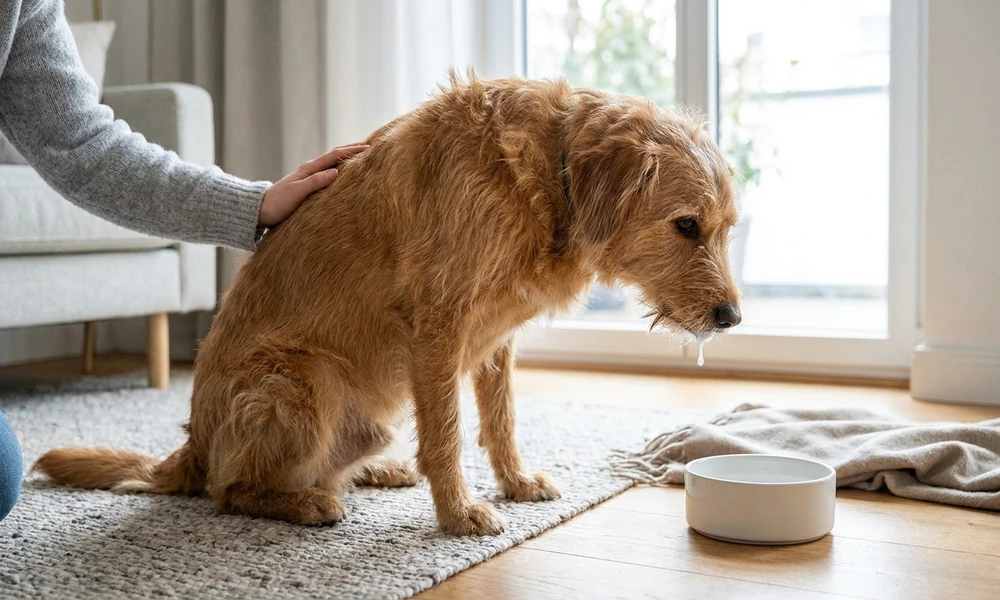
You might be standing there watching your dog lick their lips, gag, and bring up a puddle of white foam, and your stomach drops. Maybe it happened once and your dog seems fine now. Or maybe it has happened a few times today and you are starting to worry that something is very wrong. It is scary when an animal that cannot explain how they feel suddenly looks sick, and finding a trustworthy veterinary clinic serving Montgomery County can make all the difference.
That worry is understandable. Vomiting can mean anything from a simple upset stomach to a true emergency. When it is white foam, it often looks worse than it is, and that can leave you stuck in the middle, wondering if you are overreacting or not doing enough. Because of this tension, you might be asking yourself one main question. When my dog is vomiting white foam, how do I know what is safe to watch at home and what needs urgent vet care?
Here is the short version. White foam can appear with mild problems like stomach irritation or hunger, but it can also show up with serious conditions like bloat, pancreatitis, or toxin exposure. Your job is not to diagnose. Your job is to watch for specific red flag signs, keep your dog comfortable, and call a vet quickly if anything feels off or the vomiting repeats. The rest of this guide walks you through how to do that with more confidence.
What does it really mean when a dog vomits white foam?
First, it helps to understand what you are actually seeing. White foam is usually a mix of stomach fluid, a bit of mucus, and air. It often appears when the stomach is relatively empty, which is why you might see it early in the morning or several hours after a meal.
In many cases, dog vomiting white foam is linked to minor irritation of the stomach or upper intestines. For example, a dog that ate a small amount of grass, had a sudden diet change, or skipped a meal may vomit a small amount of foamy fluid once, then bounce back to normal behavior.
However, the same white foam can also show up during far more serious problems. Dogs with bloat, a twisted stomach, severe pancreatitis, or swallowing a foreign object may retch and produce only foam instead of real vomit. That is why the color or texture alone never tells the whole story. You have to look at the full picture of your dog’s behavior, body, and history.
If you want a deeper medical overview of vomiting itself, not just the foam, veterinary schools such as Cornell provide clear explanations of vomiting patterns, causes, and diagnostics. You can see a helpful summary on the Cornell Canine Health Center page on vomiting in dogs and what it means.
When is white foam “just” an upset stomach, and when is it something worse?
This is where the worry often ramps up. You may think, if I ignore this, I could miss something life threatening. But if I rush to the vet every time my dog throws up once, I might spend a lot of money and stress my dog for no reason. That is a real emotional and financial tug of war.
Here are some common, less serious reasons for white foamy vomit.
- Hunger or empty stomach vomiting, often first thing in the morning, followed by normal energy and appetite.
- Mild dietary upset from a new treat, sudden food switch, or eating a bit of grass.
- Motion sickness during or after a car ride.
- Stress or anxiety, such as during boarding or loud events.
On the other side are situations where white foam is a warning sign rather than a harmless mess.
- Bloat or gastric dilatation volvulus, where the stomach fills with gas and can twist. Dogs retch, bring up little or only foam, appear very restless or weak, and may have a tight, swollen belly. This is an emergency.
- Pancreatitis, often after a fatty meal or trash raid, with repeated vomiting, belly pain, and a sad or hunched posture.
- Foreign body obstruction, where a toy, bone, or fabric is stuck. Dogs may vomit repeatedly, lose appetite, and seem uncomfortable.
- Toxin exposure, such as some plants, medications, or chemicals, which can cause vomiting along with drooling, tremors, or collapse.
- Infectious disease, like parvo in unvaccinated dogs, with vomiting, diarrhea, and rapid decline.
So where does that leave you in the moment, cleaning up foam and trying not to panic? It helps to think in patterns. One mild episode with a bright, active dog is very different from repeated vomiting, no interest in food or water, and a dog that is getting quieter by the hour.
Trusted references such as the Merck Veterinary Manual guide on vomiting in dogs outline these patterns and remind owners that duration, frequency, and other symptoms matter more than a single event.
Home care or emergency visit: how do you decide?
To make this less abstract, imagine two dogs. The first vomits white foam once in the morning, then eats breakfast, plays, and acts completely normal. The second has vomited three times in six hours, refuses food, hides in a corner, and seems to flinch when you touch their belly. Same foam. Very different level of concern.
The table below compares common home care situations to those that usually need prompt veterinary care. It is not a substitute for a vet’s judgment, but it can give you a starting point while you are deciding what to do.
| Situation | Typical Signs | Usually Safe To Monitor At Home? | When To Call A Vet Immediately |
|---|---|---|---|
| Single episode of white foamy vomit | One vomit, dog bright, normal appetite and energy | Yes, with close watching for 12 to 24 hours | If vomiting repeats, appetite drops, or behavior changes |
| Repeated vomiting over a few hours | Several episodes, may not keep food or water down | Usually no. This is more concerning | If more than 2 to 3 episodes in a day or any sign of weakness |
| Bloat concern | Non productive retching, swollen tight abdomen, restlessness | No | Go to an emergency vet at once. This can be life threatening |
| White foam plus diarrhea | Vomiting and loose stool, mild lethargy | Maybe, if dog is still drinking and fairly bright | If there is blood, severe lethargy, or no interest in water |
| Possible toxin or foreign object | Sudden vomiting after chewing unknown item or chemical | No | Call poison control or a vet right away |
If you are ever unsure, especially with a puppy, senior dog, or one with other health problems, it is safer to at least speak with a veterinary team. A short phone call can prevent many long nights of worry.
What can you safely do at home when your dog vomits white foam?
Once you have ruled out the obvious emergencies, you might be wondering what you can actually do in the next hour to help your dog feel better and to keep things from getting worse. Here are three clear steps to guide you.
1. Pause food briefly and watch your dog closely
For a dog that has vomited white foam once or twice but is otherwise acting normal, it is often helpful to rest the stomach.
- Take away any food for about 8 to 12 hours. Do not withhold water, but offer small amounts at a time so your dog does not gulp a full bowl and vomit again.
- Use this time to observe. Is your dog still alert, tail wagging, and interested in you? Or are they becoming quieter, hiding, or breathing faster?
- Check their gums. They should be moist and pink, not pale, white, or tacky.
If things stay stable, you can move to the next step. If anything gets worse, that is your signal to call a vet instead of waiting it out.
2. Reintroduce bland food slowly if your dog seems better
If there has been no vomiting for several hours and your dog seems more comfortable, you can try a bland diet for a short period.
- Offer a small portion of plain boiled chicken or turkey and white rice, or use a vet recommended gastrointestinal diet if you have one.
- Start with a few bites. If your dog keeps this down and still feels good after a couple of hours, you can feed small amounts more often over the next day.
- Avoid fatty foods, treats, or sudden large meals. The stomach is still settling.
This kind of gentle reset can help with mild stomach upset. It is not a cure for more serious causes, so stay honest with yourself about how your dog is actually doing, not just how you hope they are doing.
3. Know the emergency signs and act fast if they appear
This is the step that protects you from second guessing yourself if things go wrong. When a dog is vomiting white foam and any of the signs below appear, you should treat it as urgent.
- Repeated vomiting or retching with little or no material produced.
- Swollen or hard abdomen, whining or resisting when you touch the belly.
- Collapse, extreme weakness, or trouble standing.
- Gums that are pale, white, blue, or very bright red.
- Blood in vomit or stool, or vomit that looks like coffee grounds.
- No interest in water for more than half a day, or signs of dehydration.
In these situations, do not try more home remedies. Do not give human medications unless a vet has already instructed you to do so for this exact problem. Call an animal hospital or emergency clinic and describe what you see. Their team can tell you if you should come in right away and what to do on the way.
Finding calm and clarity when your dog is sick
Seeing your dog vomit white foam is unnerving. It pulls at that part of you that wants to fix everything at once, yet you might feel stuck between watching and acting. You are not expected to know whether it is a simple upset stomach or a serious condition. Your job is to notice patterns, keep your dog as comfortable as you can, and reach out for help when the situation crosses from mild and brief into repeated or worrying.
When you pay attention to how often the vomiting happens, how your dog behaves between episodes, and whether any red flag signs are present, you are already doing what a careful, loving owner should do. From there, a veterinary team can guide the medical side of things. Whether it is a short course of stomach medication, fluids, imaging to rule out a blockage, or emergency surgery, they will match the treatment to the cause.
If you remember nothing else, hold on to this. A single mild episode of white foamy dog vomit in an otherwise bright dog can often be watched at home for a short time. Repeated episodes, changes in behavior, or any sign of pain or weakness are your cue to call an animal hospital without delay. Acting on that line between “probably fine” and “this feels wrong” is one of the kindest things you can do for your dog.